Showing posts with label shop. Show all posts

Tuesday, 29 January 2013

BOGOF


We all like a good deal. Getting something for less than it should be is great feeling. And some deals are just too good to turn down.

So it is with good reason that retailers obsess about making us perceive their goods as a good deal. A myriad of 'special offers' and 'bargains' are out there, each one trying desperately to lure us into a different shop. Each one trying to make us think that it is an offer simply too good to refuse. I dread to think how many times we will read Buy One Get One Free! over the course of our lifetimes.

Another example is Boots which recently ran

Every Third Item Free!

For once, the small print was interesting. 

All the items you are buying are ranked in price order, high to low. Then every third item is free. So if you were buying three things, the cheapest would be free. If you were buying six things, the third most expensive and the cheapest item would be free. So it is a better deal than getting the two cheapest items free from six. 


But I'm not sure many people would bother to read the small print on an offer for toiletries. On more expensive products, such as electronic goods, I would expect consumers to spend time understanding small print. But not when it comes to low cost items such as shampoo and razor blades. 

In conclusion, Every Third Item Free! is a good eye catching offer, but it is also complicated. Simplicity was sacrificed.

Sunday, 27 January 2013

Corporate Charity

Last night on the walk back from the local I passed the premises of a local letting agency. Whilst gawping at the cost of renting a house in Nottingham I noticed something odd. The shop window had a large picture of a football team captioned with

Castle Estates are the proud sponsors of Pegasus YFC

Why did they sacrifice prominent advertising space for this?

We can but assume that Castle Estates reckon they'll earn greater profit by advertising their community work, rather than another property.

This would fit with a larger trend for businesses to conduct prominent 'good works'. Sainsbury's and Tesco both proudly sponsor charities. 'Corporate responsibility' is the name of the game. You do not have to be overly cynical to think that they are doing this to attract custom from approving consumers.

But why?


Why does it attract consumers to know that firms are giving some (probably minimal) amount of their profits to good works? As all profit comes from the pocket of the consumer anyway, surely this charity just means higher prices? Would it not be more efficient to shop somewhere uncharitable, thus paying less, and then give your savings to the charity of your choice?

If behavioural economics has shown one thing it is that people don't just care about simple monetary gain. We are complex beings with complex motives. We like to feel good and charitable as we buy our groceries, so Tesco sells us that feeling by giving to charity. Meanwhile Castle Estates proudly supports our community.

Friday, 5 October 2012

Boots

In a similar vein to Salt and Oats I noticed something in the local Boots pharmacy earlier today...

The seated waiting area is directly facing a shelf full of products. So, what products do you think Boots would place in pride of place for people to stare at while they waited? Chocolate bars? Soft drinks?

Oh no, it was actually pregnancy tests!

If you are going to buy a pregnancy test, surely you have decided before you arrive at the pharmacy. Is sitting opposite one going to make people buy them? Surely sitting opposite food and drink will create a better return?


But maybe I am wrong, maybe sitting opposite pregnancy tests will make women think "Oh golly, what if I'm pregnant? I'd better check just in case." Maybe I underestimate the power of suggestion. Perhaps Boots know exactly what they are doing...

Thursday, 27 September 2012

Book Review - Priceless


I have a huge amount of affection for Priceless by William Poundstone because it was the book that first introduced me to behavioural economics. It prompted me to study all things behavioural at university, and I haven't looked back. For this reason I may be a little biased in favour of Priceless but the bias is, at root, caused by the book being brilliant.

William Poundstone expertly explores how shops constantly use behavioural economics to encourage you to buy their goods, while simultaneously telling the story of how behavioural economics came to be. It is an utterly gripping read, written by an accomplished journalist who knows how to keep you hooked. It will have you doing little experiments on your friends all the time (as my housemates at the time can testify).

Priceless lifts the lid on the art of pricing, advertising and marketing. You will finish it a wiser consumer, potentially less like a hapless wave; driven and tossed by the winds of capitalism.

My favourite example that he uses is of the free 72 ounce steak. Some American burger joints are famous for offering 72 ounce  steaks for $72 unless you can finish it in one sitting, in which case there is no charge. People travel miles to take the challenge, and when they do they are placed on a high table, with all their friends looking on from the rest of the restaurant. Poundstone reveals that the way these burger joints make their money is not from people failing the challenge (which is most of the time), but from their friends paying over the odds for a normal steak. Their friends' perception of value is anchored on the $72 steak, and so the $19.99 steak seems cheap, even though it might only be $9.99 elsewhere. The moral of the story is don't buy a normal steak at one of these places!

My one gripe with Priceless is that it focuses on the psychologists at the cost of behavioural economists. The two groups do not always agree and in some cases the story is rather one-sided. This, however, is a minor complaint; Priceless has so many outstanding features that make it just fantastic.

It is A Very Good Read. I can't remember what the price was, but I know how much it's worth; quite simply...

Priceless by William Poundstone
Genre: Psychology/Behavioural Economics
Accessibility: 10/10
Accuracy: 7/10
Readability: 10/10
Usefulness: 8/10
Verdict: A Very Good Read

Saturday, 15 September 2012

Beyond Own Brand


As we perused the soup section of my local Tesco recently, it was obvious to my friend and I that Tesco were pushing their own brand soup (Tesco Everyday Value). A lot of shelf space close to other cheap soups was dedicated to it. However, the vast majority of the soup category was taken up by Heinz - a brand known mainly for its quality rather than price. It would appear that Tesco was not directly competing with Heinz, especially as Tesco Everyday Value soup was not placed directly next to the Heinz soups.

We were wrong.

Upon closer inspection (and a little light research) we discovered that Crosse & Blackwell, a high end brand placed next to Heinz, is owned by Tesco.


So what?

Tesco is clearly wanting to gain market share in the world of quality soup (who wouldn't?). However, they've realised that consumers see Tesco Everyday Value as an inferior option to brands like Heinz. If you wanted a really nice soup, you would look at Heinz, Campells or Baxters. Not Tesco Everyday Value.

People are very good at creating rules of thumb; seeing Tesco on the packaging usually means low price, not high quality. Thus when we quickly (and we're always in a rush) scan shelf after shelf of similar looking soups, we narrow down the options using rules of thumb. (This isn't a criticism of consumer behaviour; rules of thumb are necessary to survive in this complicated world.) We quickly rule out Tesco own brand soup as inferior (correctly or not).

So what do Tesco do?


They create (or buy) a brand that consumers will not immediately write off as low quality. Crosse & Blackwell are the method Tesco are using to squeeze market share out of Heinz. Instead of fighting the rule of thumb and re-branding Tesco Everyday Value, they simply create a new brand. Simples.

Thursday, 6 September 2012

Tesco Nappies


Own brand products are ubiquitous in supermarkets. Why are they there? How do the supermarkets convince us to buy them?

As I walked around Tesco earlier today I noticed the huge similarity between Tesco own brand goods and branded items (made by a separate supplier).

Let's take the example of nappies. Here Pampers (owned by Proctor and Gamble) is the leading brand. They occupied about 60% of the shelf space in the nappy category. Approximately 20% were Huggies and a further 20% were own brand; Tesco. (This is a rough guide of market share).

The first question is why were Tesco competing with P&G in the nappy market anyway?

The answer lies in the profit margin. By selling their own goods, supermarkets cut out the middleman. They make more money selling their own brand goods than branded ones. However, each individual product space, or 'facing', is at a premium. The rate of sale is important. This leads us onto the second question.

How does Tesco convince us to buy their own brand products?

When an own brand product is in direct competition with a branded one, like the nappies pictured, the supermarket will try to convince us that their (usually) cheaper product does "just as good a job". It uses tricks such as the following to promote similarity between the different products:

  • Placement. Own brand goods are often placed right next to branded ones, and often in the best position ("eye-level is buy-level").
  • Colour. The pictures of the nappies above are a textbook example of a supermarket copying the colour of the market leader. Colour is of huge importance in our brains, and colour schemes are nicked wholesale from the branded goods.
  • Emotional intent. There is a picture of a smiling baby on every pack of nappies in the store (the one exception is a line of uber-cheap Tesco nappies, occupying a tiny section of the bottom shelf).
  • General aspects of design. For example, the number of nappies is on the bottom right corner.
  • Packaging. Both types of nappies come in similar plastic packaging, and are of similar size.

Thus supermarkets use psychology and behavioural economics in an attempt to persuade that their product is just as good.

Does that make us fools for buying own brand goods??

No. Well, not necessarily. The own brand stuff may genuinely be just as good, or even better. Remember, branded goods are constantly trying to keep you loyal. They do not like it when you try out the competitors - they might be better!

Conclusion?

Be rational.

Realistic conclusion?

At least try to be aware of what shops and suppliers are trying to make you feel, think and do.

How??

Know some behavioural economics!

Thursday, 16 August 2012

Salt And Oats - Fire Coming Out Of The Monkey's Head


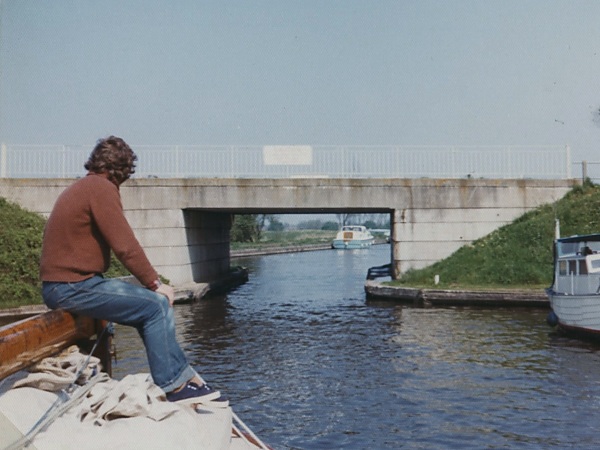
Sailing on the Norfolk Broads is both a wonderful and totally unique experience. We cruise around beautiful rivers and lakes in 1930s yachts, enjoying getting away from the world. Every now and then, however, we have to stop at outposts of civilisation for supplies. Ludham Bridge Stores is one such outpost. It is almost the dictionary definition of a monopoly; the nearest competitor is at least half a day by sail. So improving their shop using behavioural economics probably isn't a high priority for the owners, but I humbly suggest that they might be able to increase their profitability somewhat...

The first thing you see as you enter the front door is salt and oats. Right in your face. At eye-level. About 50cm from your face.

Now, I'm fairly confident when I say that salt and oats are the exact opposite of 'impulse buys'. No-one ever in the history of humanity has ever walked into a shop, seen some salt, and thought to themselves:

"Oooh... That might nice..."

Why? Because people know whether they need salt or not. They have either run out of salt, in which case they will buy it wherever you put in the shop, or they have not run out of salt, in which case they will not buy it.

It's a fairly similar story with oats.

And, worse than wasting the prime spot in the shop to get people to buy something on an impulse (like, say, an ice-cream) you have, in one fell swoop, changed the consumer journey. They will now be thinking:

"Oh, I don't need salt... What do I need?"

By getting people to think about what they need rather than what they would like, Ludham Bridge Stores probably sells fewer ice-creams and other such-like impulse items.

After saying all this as I stood with friends at the entrance to the shop a few weeks ago, I was told to shut-up, hurry-up and just buy something by my mates. Such is the life of a behavioural economist.

Ludham Bridge

Recommended listening:
Fire Coming Out Of The Monkey's Head by Gorillaz