Showing posts with label consumer journey. Show all posts

Sunday, 27 January 2013

Corporate Charity

Last night on the walk back from the local I passed the premises of a local letting agency. Whilst gawping at the cost of renting a house in Nottingham I noticed something odd. The shop window had a large picture of a football team captioned with

Castle Estates are the proud sponsors of Pegasus YFC

Why did they sacrifice prominent advertising space for this?

We can but assume that Castle Estates reckon they'll earn greater profit by advertising their community work, rather than another property.

This would fit with a larger trend for businesses to conduct prominent 'good works'. Sainsbury's and Tesco both proudly sponsor charities. 'Corporate responsibility' is the name of the game. You do not have to be overly cynical to think that they are doing this to attract custom from approving consumers.

But why?


Why does it attract consumers to know that firms are giving some (probably minimal) amount of their profits to good works? As all profit comes from the pocket of the consumer anyway, surely this charity just means higher prices? Would it not be more efficient to shop somewhere uncharitable, thus paying less, and then give your savings to the charity of your choice?

If behavioural economics has shown one thing it is that people don't just care about simple monetary gain. We are complex beings with complex motives. We like to feel good and charitable as we buy our groceries, so Tesco sells us that feeling by giving to charity. Meanwhile Castle Estates proudly supports our community.

Thursday, 16 August 2012

Salt And Oats - Fire Coming Out Of The Monkey's Head


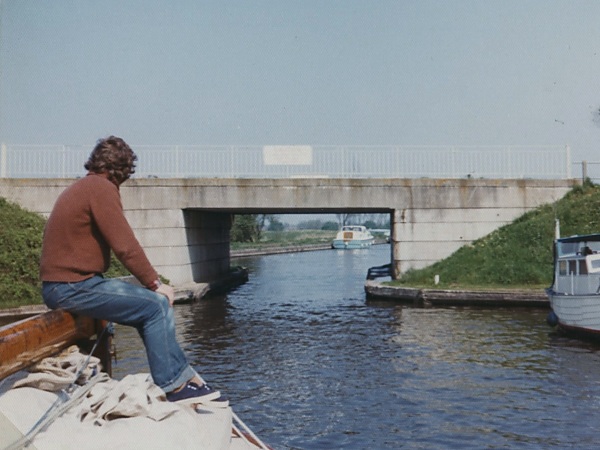
Sailing on the Norfolk Broads is both a wonderful and totally unique experience. We cruise around beautiful rivers and lakes in 1930s yachts, enjoying getting away from the world. Every now and then, however, we have to stop at outposts of civilisation for supplies. Ludham Bridge Stores is one such outpost. It is almost the dictionary definition of a monopoly; the nearest competitor is at least half a day by sail. So improving their shop using behavioural economics probably isn't a high priority for the owners, but I humbly suggest that they might be able to increase their profitability somewhat...

The first thing you see as you enter the front door is salt and oats. Right in your face. At eye-level. About 50cm from your face.

Now, I'm fairly confident when I say that salt and oats are the exact opposite of 'impulse buys'. No-one ever in the history of humanity has ever walked into a shop, seen some salt, and thought to themselves:

"Oooh... That might nice..."

Why? Because people know whether they need salt or not. They have either run out of salt, in which case they will buy it wherever you put in the shop, or they have not run out of salt, in which case they will not buy it.

It's a fairly similar story with oats.

And, worse than wasting the prime spot in the shop to get people to buy something on an impulse (like, say, an ice-cream) you have, in one fell swoop, changed the consumer journey. They will now be thinking:

"Oh, I don't need salt... What do I need?"

By getting people to think about what they need rather than what they would like, Ludham Bridge Stores probably sells fewer ice-creams and other such-like impulse items.

After saying all this as I stood with friends at the entrance to the shop a few weeks ago, I was told to shut-up, hurry-up and just buy something by my mates. Such is the life of a behavioural economist.

Ludham Bridge

Recommended listening:
Fire Coming Out Of The Monkey's Head by Gorillaz