Example taken from Bazerman and Moore (2009) based on Wason (1960):
Imagine the following sequence of numbers follows a rule, and that your task is to diagnose that rule. When you write down other sequences of three numbers, your instructor will tell you whether or not your sequences follow the rule.
2-4-6
What sequences would you write down?
Commonly guessed patterns include "numbers go up by two" and "the difference between the first two two numbers equals the difference between the last two numbers". In fact, the rule was much broader: "any three ascending numbers". But people had only tried sequences that tested their hypothesis by accumulating evidence that confirmed it, but didn't test for wider rules. They fell into the confirmation trap by just seeking to confirm their suspicions by trying sequences like 1-3-5 and 22-24-26 instead of trying, for example, 1-2-3 or 1-2-10.
This is called the confirmation bias. In all walks of life, from politics to business, people seek to confirm their beliefs rather than really test them.
People ask "May I believe it?" rather than "Must I believe it?"
Showing posts with label experiment. Show all posts
Wednesday, 6 February 2013
Tuesday, 5 February 2013
Econitus
The following problem is adapted from Bazerman and Moore (2009) Judgement in Managerial Decision Making:
Lisa is worried about her health. Her doctor tells her not to worry too much as there is only a 1 in 1,000 chance that women of her age has the dreaded Econitus virus. Nevertheless, Lisa remains anxious about this possibility and decides to obtain a test that can detect Econitus. The test is moderately accurate: When someone has Econitus it delivers a positive result 86% of the time. But there is, however, a small 'false positive' rate: 5% of people produce a positive result despite not having Econitus. Lisa takes the test and obtains a positive result. What are the chances that she has Econitus?
0-20 percent chance
21-40 percent chance
41-60 percent chance
61-80 percent chance
81-100 percent chance
The correct answer is 1.7%!
If you answered 86% then you fell into the common trap of ignoring 'base rates'...
If 1,000 women like Lisa take the test, 999 will not have Econitus. But the false positive result means 50 will be told they have Econitus. Therefore there is only 1.7% chance that Lisa has Econitus (trust me!).
What this demonstrates is that people ignore background information in favour of more salient information about a specific case.
Hopefully this will be useful the next time you are given statistics by a doctor...
Lisa is worried about her health. Her doctor tells her not to worry too much as there is only a 1 in 1,000 chance that women of her age has the dreaded Econitus virus. Nevertheless, Lisa remains anxious about this possibility and decides to obtain a test that can detect Econitus. The test is moderately accurate: When someone has Econitus it delivers a positive result 86% of the time. But there is, however, a small 'false positive' rate: 5% of people produce a positive result despite not having Econitus. Lisa takes the test and obtains a positive result. What are the chances that she has Econitus?
0-20 percent chance
21-40 percent chance
41-60 percent chance
61-80 percent chance
81-100 percent chance
The correct answer is 1.7%!
If you answered 86% then you fell into the common trap of ignoring 'base rates'...
If 1,000 women like Lisa take the test, 999 will not have Econitus. But the false positive result means 50 will be told they have Econitus. Therefore there is only 1.7% chance that Lisa has Econitus (trust me!).
What this demonstrates is that people ignore background information in favour of more salient information about a specific case.
Hopefully this will be useful the next time you are given statistics by a doctor...
Monday, 4 February 2013
Boy Or Girl??
The following problem is taken from Bazerman and Moore (2009) Judgement in Managerial Decision Making:
You and your spouse have had three children together, all of them girls. Now that you are expecting your fourth child, you wonder whether the odds favour having a boy this time. What is the best estimate of your probability of having another girl?
6.25% (1 in 16), because the odds of getting four girls in a row is 1 out of 16
50% (1 in 2), because there is roughly an equal chance of getting each gender
A percentage that falls somewhere between the two estimates (6.25-50 percent)
The answer is 50%. (The sperm that determines gender of the child does not know the gender of previous children! In other words, the gender of each child is independent of that their siblings.)
So what explains our potentially wayward intuition here?
According to Kahneman and Tversky (1974) "Chance is commonly viewed as a self-correcting process in which a deviation in one direction induces a deviation in the opposite direction to restore the equilibrium. In fact, deviations are not corrected as a chance process unfolds, they are merely diluted."
So there you go, hope this helps when you're expecting your fourth child...
You and your spouse have had three children together, all of them girls. Now that you are expecting your fourth child, you wonder whether the odds favour having a boy this time. What is the best estimate of your probability of having another girl?
6.25% (1 in 16), because the odds of getting four girls in a row is 1 out of 16
50% (1 in 2), because there is roughly an equal chance of getting each gender
A percentage that falls somewhere between the two estimates (6.25-50 percent)
The answer is 50%. (The sperm that determines gender of the child does not know the gender of previous children! In other words, the gender of each child is independent of that their siblings.)
So what explains our potentially wayward intuition here?
According to Kahneman and Tversky (1974) "Chance is commonly viewed as a self-correcting process in which a deviation in one direction induces a deviation in the opposite direction to restore the equilibrium. In fact, deviations are not corrected as a chance process unfolds, they are merely diluted."
Friday, 11 January 2013
Remember Remember...
If we are rational creatures then we need to be able to remember accurately. Interestingly, however, our memory is as complex as a Rubik's cube in a maze.
One rule of thumb initially discovered by Daniel Kahneman is the peak-end rule. He got patients undergoing a painful operation to note down the amount of pain (out of ten) they were in, minute by minute. Thus he was able to create graphs of the sum total of pain patients experienced. For example (my data):
The patients were then asked after the operation to remember how much pain they went through. To be consistent they should have given the average amount of pain they recorded during the operation (here 5.5). But they didn't. Instead they tended to report the average of two points: the most memorable (the peak) and the end of the operation (here 5).
Thus our memory tricks us. We do not remember a how a whole experience (good or bad) was, instead averaging the best/worst bit and the end. This is a challenge to those who defend human rationality. If we do not remember accurately, then how can we make decisions that maximise our personal benefit/satisfaction/goals?
Kahneman then decided to prove the peak end rule (using, in my opinion, ethically dubious methods). He asked the surgeons to extend the operations subjects went through by leaving their instruments in the patient at the end for a couple of minutes. This increased the length of the operation. It also meant that the pain experienced in the final couple of minutes of the operation fell. In accordance with the theory, although the total amount of pain experienced went up, the amount of pain patients remembered fell. Gruesome but true.
One rule of thumb initially discovered by Daniel Kahneman is the peak-end rule. He got patients undergoing a painful operation to note down the amount of pain (out of ten) they were in, minute by minute. Thus he was able to create graphs of the sum total of pain patients experienced. For example (my data):
The patients were then asked after the operation to remember how much pain they went through. To be consistent they should have given the average amount of pain they recorded during the operation (here 5.5). But they didn't. Instead they tended to report the average of two points: the most memorable (the peak) and the end of the operation (here 5).
Thus our memory tricks us. We do not remember a how a whole experience (good or bad) was, instead averaging the best/worst bit and the end. This is a challenge to those who defend human rationality. If we do not remember accurately, then how can we make decisions that maximise our personal benefit/satisfaction/goals?
Kahneman then decided to prove the peak end rule (using, in my opinion, ethically dubious methods). He asked the surgeons to extend the operations subjects went through by leaving their instruments in the patient at the end for a couple of minutes. This increased the length of the operation. It also meant that the pain experienced in the final couple of minutes of the operation fell. In accordance with the theory, although the total amount of pain experienced went up, the amount of pain patients remembered fell. Gruesome but true.
Thursday, 10 January 2013
Risky risky...
I am about to toss a fair coin. If heads you win £100. If tails you lose £100.
Do you want to play this gamble?
If yes, then you are risk-preferring.
If no, then you are risk-averse.
If you are indifferent, then you are risk-neutral.
That is because the expected value of the gamble is £0 (100x0.5 + -100x0.5 = 0).
Personally I would not like this gamble, which makes me risk averse. The extent of my risk averseness would have to be revealed by considering different gambles, but as long as I am consistent in my attitude to risk an economist could call me rational.
Here are a copuple of other interesting gambles which may shed light on your attitude to risk:
I am about to toss a fair coin. If heads you win £100. If tails you lose £75. Do you want to play?
I am about to toss a fair coin. If heads you win £1000. If tails you lose £50. Do you want to play?
If you would not like to play these gambles then you highly risk averse... Personally I think I would probably play both, definitely the latter one.
Do you want to play this gamble?
If yes, then you are risk-preferring.
If no, then you are risk-averse.
If you are indifferent, then you are risk-neutral.
That is because the expected value of the gamble is £0 (100x0.5 + -100x0.5 = 0).
Personally I would not like this gamble, which makes me risk averse. The extent of my risk averseness would have to be revealed by considering different gambles, but as long as I am consistent in my attitude to risk an economist could call me rational.
Here are a copuple of other interesting gambles which may shed light on your attitude to risk:
I am about to toss a fair coin. If heads you win £100. If tails you lose £75. Do you want to play?
I am about to toss a fair coin. If heads you win £1000. If tails you lose £50. Do you want to play?
If you would not like to play these gambles then you highly risk averse... Personally I think I would probably play both, definitely the latter one.
Saturday, 8 December 2012
The Golden Rule
I heard a presentation by an economist this week about an experiment he had run which attempted to measure whether people abided by the Golden Rule in their economic interactions:
This is a very interesting question and it would be fascinating to know the extent to which people treat others as they wish to be treated themselves. Sadly, however, the paper in question did not live up to expectations and was flawed. Empirically measuring motivation is hard!
But it did get me thinking...
Why do I care about someone else's motivation? Surely if I am the coldly rational man that neoclassical economics assumes me to be, then I shouldn't worry about motivation; I should just care about their actions that effect me. But experimental evidence shows that people do care about motivation. They act differently if they think someone is trying to be nice or trying to screw them over (even if the action they observe is the same). Indeed, experiments show that people don't always act in the way that a coldly rational economist might expect them to.
It would seem that there is something inherent in us that does care about motivation. That does pay heed to things beyond monetary payoff. That does give a damn about morality.
Potentially heretical thoughts for an economist, I know.
"Do to others as you would have them do to you."
- Luke 6:31
This is a very interesting question and it would be fascinating to know the extent to which people treat others as they wish to be treated themselves. Sadly, however, the paper in question did not live up to expectations and was flawed. Empirically measuring motivation is hard!
But it did get me thinking...
Why do I care about someone else's motivation? Surely if I am the coldly rational man that neoclassical economics assumes me to be, then I shouldn't worry about motivation; I should just care about their actions that effect me. But experimental evidence shows that people do care about motivation. They act differently if they think someone is trying to be nice or trying to screw them over (even if the action they observe is the same). Indeed, experiments show that people don't always act in the way that a coldly rational economist might expect them to.
It would seem that there is something inherent in us that does care about motivation. That does pay heed to things beyond monetary payoff. That does give a damn about morality.
Potentially heretical thoughts for an economist, I know.
Tuesday, 27 November 2012
Book Review - Prisoner's Dilemma
What links the H-bomb, playing chicken and the Cuban missile crisis to game theory?
The answer, according to William Poundstone, is the famous game called the prisoner's dilemma (see here for a fun example). His 1992 book Prisoner's Dilemma is not recent (I was a toddler back then) but is still both fascinating and relevant.
Poundstone's approach is to carefully weave together a biography of John von Neumann and a potted history of the nuclear arms race with examples of fun games. The end result is an utterly gripping read (between you and me I read it in lectures) that never fails to surprise (whether you be an economist or normal).
So as not to ruin the book I'll only share one example of H-bomb game theory...
First, read this fun example of a brilliant game to play with your friends.
Now, the 'Dollar Game' is special because it induces buyers regret. Those who bid inevitably wish they hadn't! There is a rapid escalation. Before we know it, both bidders are wishing they were back where they started. But they always have an incentive to go one higher. They do not want to be left in second place. This is not dissimilar to the nuclear arms race.
The analogy starts with America building the A-bomb at the end of WWII. Understandably, Russia could not contemplate being out gunned so they got one. So the USA understandably got more A-bombs. So did the USSR. So America built the H-bomb. So Russia did too. And so on. The starting position led to escalation and both states ended up in a worse position than at the start when neither had any nuclear bombs: They had spent a lot of money on no tactical advantage. If they had coordinated they could have stopped at some point (i.e. just having one A-bomb each). Sadly for both nations this was never likely to happen.
In fact, the more Poundstone delves into the cold war the more analogies crop up. Coincidently (or not) the people who originally created game theory, such as John von Neumann, also created the bomb.
I highly recommend you read Prisoner's Dilemma so that (if nothing else) you can start to see real life conundrums through game theory spectacles, and what spectacles!
Genre: Economics/Behavioural Economics
Accessibility: 10/10
Accuracy: 9/10
Readability: 9/10
Usefulness: 7/10
Verdict: Very, very interesting!
Thursday, 1 November 2012
Food Shopping Survey Results
The results are back from the survey that I carried out last week (after analysis on Stata).
(For a more technical critique please see here)
Headline result:
- The more often people shop for food, the more likely they are to think that they buy items of food out of habit. I think the most likely explanation for this is that people who shop more often have more opportunity to create habits - the reinforcement mechanism is stronger if you buy food twice a week compared to fortnightly. However, it was only significant at the 10% level and so it is not conclusive evidence.
- There is no connection between whether people consider themselves a 'creature of habit' and whether they think they buy items of food out of habit. I find this surprising. I suggest that this might be because creature of habit could be seen as a positive character trait, while buying food our of habit could be seen as lazy. Thus the result could be because people are trying to present themselves in a positive light (even if only to themselves).
- There is no connection between the extent to which people think they consider the price of food and whether they think they buy items of food out of habit. I find this surprising. I expected a negative relationship. At the very least I expected that asking people about whether they looked at prices might prompt them into saying they bought less out of habit, but no significant effect was found.
- There is no systematic difference between male and female respondents.
In conclusion, none of my hypothesised variables affected whether people think they buy items of food out of habit (apart from how often they go shopping). Obviously, I find this surprising.
Food Shooping Survey Critique
Let me start this critique with a disclaimer: If I read these survey results in an academic journal I would not treat them as highly robust. I am ok with this. It was not intended to be a highly robust investigation into consumer perceptions, rather I undertook the survey to get a flavour for consumer thinking and research. I have learnt a lot, both about consumers and about how to go about consumer research.
Reasons why my survey is not highly robust:
Regarding my opening foray into consumer research:
SurveyMonkey is a great piece of kit, but has it's flaws too. Notably, if you only use their free service then it is time consuming to input the results into Excel. Also, you can only ask 10 questions using their free service which is highly restrictive. Stata, however, is a highly powerful and useful statistics software that was able to do everything I asked of it and more.
Reasons why my survey is not highly robust:
- There were no incentives for accurate answers.
- The sample size was small (72)
- The sample was found through facebook and GuruHogg and as such is not representative of the whole population (although it was never intended to be).
- Internet surveys are only ever going to sample those who use the internet.
- 10% significance is not enough. 5% significance is required. The result that increasing how often you go shopping by one shop a week increases perceptions of purchasing habit by 17% is not highly robust.
- Offer incentives.
- Recruit a larger sample.
- Recruit the sample from a more diverse section of society.
- Ask better worded questions: fewer dummy variables.
- Use an experiment rather than a survey!
Regarding my opening foray into consumer research:
SurveyMonkey is a great piece of kit, but has it's flaws too. Notably, if you only use their free service then it is time consuming to input the results into Excel. Also, you can only ask 10 questions using their free service which is highly restrictive. Stata, however, is a highly powerful and useful statistics software that was able to do everything I asked of it and more.
Monday, 29 October 2012
Irrational Coursemates
This is an experiment used by one of my lecturers (Prof Seidmann) last week on 100 MSc Economics students at the start of a lecture...
We were told the following:
Choose a whole number between 0 and 99 (inclusive).
He will calculate the average (mean) of the numbers chosen by everyone here and divide by 2.
The winner is the person that chooses the number closest to this (half the average).
What number would you pick?
I picked zero.
This is because it is the rational thing to do. If the average is 50 then half the average will be 25. But if half the average is 25 then everyone should choose 25. Then half the average will be 12.5. And so on... Eventually you end up at zero.
My calculation, however, was flawed. I had assumed that MSc Economics students are rational. Further, I had assumed that MSc Economics students think that MSc Economics students are rational.
One person sitting near me was irrational and put 50 (possibly they misunderstood the instructions). Already I knew that my guess of zero was not going to be exactly correct.
In the end the correct answer was about 13.
My first response was "Just how stupid are my coursemates?!"
But then I realised that many in the room would have suspected that others were irrational and so guessed a positive number. For example, the person sitting next to me put 7 although he knew the rational thing to put was zero.
Some people may have been trying to second guess what people thought people thought would do! And so on. Thus we cannot (yet) conclude that all my coursemates are stupid (as well as me).
In conclusion, even if you are rational, you may not always act as economists might expect because you might be expecting others to be irrational. Funny old world.
We were told the following:
Choose a whole number between 0 and 99 (inclusive).
He will calculate the average (mean) of the numbers chosen by everyone here and divide by 2.
The winner is the person that chooses the number closest to this (half the average).
What number would you pick?
I picked zero.
This is because it is the rational thing to do. If the average is 50 then half the average will be 25. But if half the average is 25 then everyone should choose 25. Then half the average will be 12.5. And so on... Eventually you end up at zero.
My calculation, however, was flawed. I had assumed that MSc Economics students are rational. Further, I had assumed that MSc Economics students think that MSc Economics students are rational.
One person sitting near me was irrational and put 50 (possibly they misunderstood the instructions). Already I knew that my guess of zero was not going to be exactly correct.
In the end the correct answer was about 13.
My first response was "Just how stupid are my coursemates?!"
But then I realised that many in the room would have suspected that others were irrational and so guessed a positive number. For example, the person sitting next to me put 7 although he knew the rational thing to put was zero.
Some people may have been trying to second guess what people thought people thought would do! And so on. Thus we cannot (yet) conclude that all my coursemates are stupid (as well as me).
In conclusion, even if you are rational, you may not always act as economists might expect because you might be expecting others to be irrational. Funny old world.
Sunday, 21 October 2012
The Endowment Effect
I am very pleased to introduce a guest blog by Alex Silk. Alex is somewhat of an expert on the endowment effect and I have been bugging him for months to write this post: Enjoy!
The endowment effect is demonstrated in a really simple
experiment that was conducted by an economist called Jack Knetsch back in 1989.
The experiment had three separate treatments. In the first treatment each
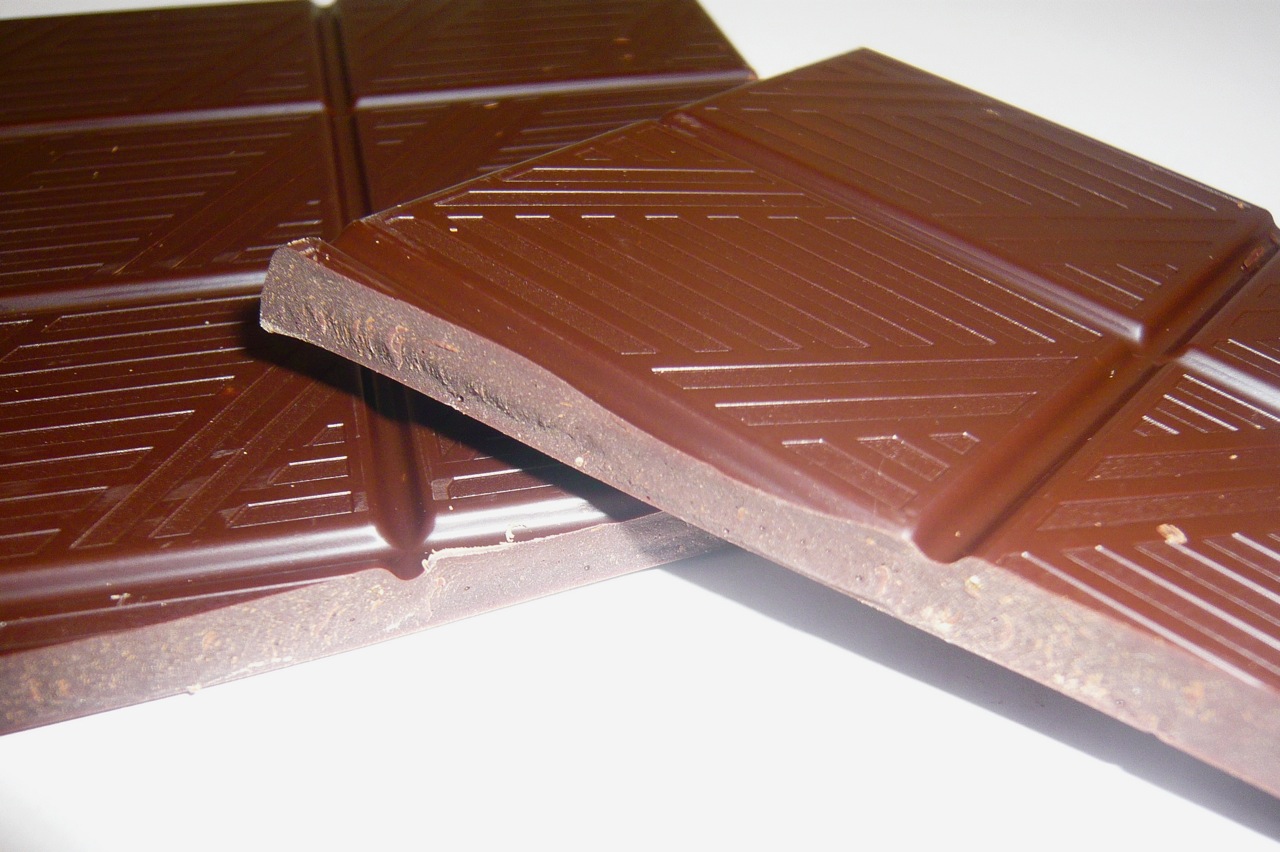
participant was given a (identical) mug, they were told that this was a gift.
They were then each given the option of switching the mug for a bar of Swiss
chocolate (which could be bought at the same price as the mug). The second
treatment was the reverse of this; each participant was initially given the
chocolate bar and was then asked whether or not they wanted to exchange it for
the mug. Standard economic theory predicts that the proportion of subjects who end up leaving the experiment with a mug
should be equal in both treatments (allowing for random error) – this
appears to be a fairly reasonable assumption. So what do you think happened?
Well what Mr Knetsch found was that in both treatments 90%
of people kept the item which they were originally given. Furthermore, in a
third treatment where each participant was given a straight choice between the
mug and the chocolate bar 56% of people chose the mug (where again economic
theory predicts the proportions should be the same as in the first two
treatments).
What the experiment demonstrates is something called the
endowment effect: people value a good more highly when they are in possession
of it. While this is a significant violation of some important economic
theories (something that for your sake I hope you are not too concerned about!),
on one level this may not seem that surprising to you: a child would value her
favourite teddy bear more than an identical one sitting on a shelf in a shop.
However, what may be surprising is the fact that other experiments have shown
that virtually as soon as you take ownership of a good you value it more (unless
you expect to sell it in the near future).
So the next time you buy a can of baked beans remember that,
subconsciously at least, you value that can slightly more than each of the cans
you left behind you in the shop. Isn’t that useful to know?
- Alex Silk
Tuesday, 7 August 2012
Psychology Deception - Acceptable In The 80s
Apparently some 30-50% of psychology experiments published in top journals use deception (Hertwig and Ortmann, 2001). Why?
One reason for deceiving subjects is that it enables experimenters to create interesting situations. For example, we might want to see how people react in an emergency. Another reason is that it allows experimenters to hide the real purpose of the experiment from subjects. For example, we might want to stop people just giving the politically correct answers instead of what they really think (Nick Wilkinson, 2008).
However, the use of deception is frowned upon by economists.
The main problem is that people aren't stupid. Word gets round. Only the naive would enter a psychology experiment without the expectation of deception on the part of the experimenter. This has knock-on effects on behaviour. If you suspect you're being deceived you may just behave differently thus defeating the whole point of the experiment in the first place.
Thus there are few examples of deception in the world of experimental economics. This should mean that our results stay reliable, even if in the short term we are more limited in what we can do. In an ideal world deception would never ever be used in any experiment, but sadly there is little incentive for everyone to act for the greater good (cf. the free-rider problem).
Fully aware of the irony, I am going to end this post by saying that guruhogg has never knowingly used deception.
Recommended listening:
Acceptable In The 80s by Calvin Harris
Monday, 2 July 2012
Experimental Dishonesty - Love The Way You Lie
I recently partook in a really interesting experiment at the CeDEx lab at the University of Nottingham and thought I would briefly describe it...
If you would like to, please feel free to skip to the punchline at the end for some interesting thoughts on dishonesty...
There were 16 participants: 8 "buyers" and 8 "sellers". We were told that we were trading a notional good which started in the seller's possession. There were 8 periods for trades. In each period I, a buyer, would be paired with a different seller. We would meet in a room and were allowed 3 minutes of conversation, during which we could talk about anything. We would both then go back to our original rooms and write down our buying/selling price. These would then be collected by the experimenters.
If the stated buying price was lower than than the stated selling price no trade was done. If the buying price equalled the selling price, it was the final trading price. If the buying price was higher than the selling price then the final trading price was halfway between them.
So far, so straightforward.
The interesting bit was that before each period each buyers was told what "value" the notional good was worth to them that period. Buyers either valued the good at £3 or £9. Also before each period the sellers were told what it "cost" them to provide the good; either £1 or £7. The buyers' value and sellers' cost were both decided by drawing a ball out of a hat. Each value (£3 or £9) had an equal chance of being picked (50%), and each cost (£1 or £7) had an equal chance of being picked (50%).
So I, as buyer, always knew my valuation of the good (which was decided by the hat before each period). BUT I was not informed of the sellers' cost, and neither were the sellers ever informed of my valuation.
I kept the difference between the final trading price and my value as "profit". The sellers kept the difference between the final price and their cost a profit too. Thus everyone could benefit from a trade most of the time. But that does not guarantee that the profit would be shared equally (I could get very little profit and the seller could get lots, and vice versa).
By now you should be starting to grasp the the essence of the experiment. The following scenarios are possible:
Value: £9 Cost: £7 - Potential deal, somewhere in the region of £7-£9
Value: £3 Cost: £7 - NO DEAL
Value: £3 Cost: £1 - Potential deal, somewhere in the region of £1-£3
Value: £9 Cost: £1 - Potential deal, somewhere in the region of £1-£9
However, there is an incentive to be dishonest in your 3 minute conversation with the other party. If I had the value of £9, I could gain more by persuading the seller that I actually had the value of £3, because then the price would be lower.
If the seller has the cost £1 they have an incentive to persuade me that their cost is £7, because then the price would be higher.
But remember, if the buying price is below the selling price then no trade is done and no-one benefits.
--------------------------------------------------------PUNCHLINE-------------------------------------------------------------
In this experiment, dishonesty pays.
Would you be dishonest? (remember this is real money...)
I completed the experiment without telling a lie (I did, however, use negotiating tactics to get a better deal). Over the 8 periods I earned £17.20 (about average, I suspect). Some sellers were honest to me about their cost, but most were not (a seller's final trading price can be revealing about their true cost). I ended the experiment with less faith in humanity!
However, in real life people tend to interact more than once. If someone is dishonest I will not trade with them again. Thus the experiment does not necessarily translate to real life.
I'll finish with an interesting question...
Why do humans value honesty? Why, deep down, do we know that we are doing "wrong" when we are dishonest? Survival of the fittest would surely favour dishonest behaviour...
Recommended listening:
Love The Way You Lie by Eminem, Rihanna
If you would like to, please feel free to skip to the punchline at the end for some interesting thoughts on dishonesty...
There were 16 participants: 8 "buyers" and 8 "sellers". We were told that we were trading a notional good which started in the seller's possession. There were 8 periods for trades. In each period I, a buyer, would be paired with a different seller. We would meet in a room and were allowed 3 minutes of conversation, during which we could talk about anything. We would both then go back to our original rooms and write down our buying/selling price. These would then be collected by the experimenters.
If the stated buying price was lower than than the stated selling price no trade was done. If the buying price equalled the selling price, it was the final trading price. If the buying price was higher than the selling price then the final trading price was halfway between them.
So far, so straightforward.
The interesting bit was that before each period each buyers was told what "value" the notional good was worth to them that period. Buyers either valued the good at £3 or £9. Also before each period the sellers were told what it "cost" them to provide the good; either £1 or £7. The buyers' value and sellers' cost were both decided by drawing a ball out of a hat. Each value (£3 or £9) had an equal chance of being picked (50%), and each cost (£1 or £7) had an equal chance of being picked (50%).
So I, as buyer, always knew my valuation of the good (which was decided by the hat before each period). BUT I was not informed of the sellers' cost, and neither were the sellers ever informed of my valuation.
I kept the difference between the final trading price and my value as "profit". The sellers kept the difference between the final price and their cost a profit too. Thus everyone could benefit from a trade most of the time. But that does not guarantee that the profit would be shared equally (I could get very little profit and the seller could get lots, and vice versa).
By now you should be starting to grasp the the essence of the experiment. The following scenarios are possible:
Value: £9 Cost: £7 - Potential deal, somewhere in the region of £7-£9
Value: £3 Cost: £7 - NO DEAL
Value: £3 Cost: £1 - Potential deal, somewhere in the region of £1-£3
Value: £9 Cost: £1 - Potential deal, somewhere in the region of £1-£9
However, there is an incentive to be dishonest in your 3 minute conversation with the other party. If I had the value of £9, I could gain more by persuading the seller that I actually had the value of £3, because then the price would be lower.
If the seller has the cost £1 they have an incentive to persuade me that their cost is £7, because then the price would be higher.
But remember, if the buying price is below the selling price then no trade is done and no-one benefits.
--------------------------------------------------------PUNCHLINE-------------------------------------------------------------
In this experiment, dishonesty pays.
Would you be dishonest? (remember this is real money...)
I completed the experiment without telling a lie (I did, however, use negotiating tactics to get a better deal). Over the 8 periods I earned £17.20 (about average, I suspect). Some sellers were honest to me about their cost, but most were not (a seller's final trading price can be revealing about their true cost). I ended the experiment with less faith in humanity!
However, in real life people tend to interact more than once. If someone is dishonest I will not trade with them again. Thus the experiment does not necessarily translate to real life.
I'll finish with an interesting question...
Why do humans value honesty? Why, deep down, do we know that we are doing "wrong" when we are dishonest? Survival of the fittest would surely favour dishonest behaviour...
Recommended listening:
Love The Way You Lie by Eminem, Rihanna
Friday, 15 June 2012
Incentives - Ante Up
In a recent blog I outlined a common experiment called the Ultimatum Game and asked people what they would do. Much thanks to one reader who hit on a big issue in behavioural economics, that of incentivisation.
She pointed out that the money was purely theoretical (sadly guruhogg has no real money to offer). Therefore, how can we be sure that the behaviour we observe is what would really happen? Individuals may say they will do one thing, but if the decision had real consequences they might act differently.
Real economics experiments are very careful to make sure that subjects have an incentive to answer honestly. This is done by making real money ride on the decisions people make. In the Ultimatum Game example there would be an incentive because of the £10 riding on it.
Experiments which do not involve adequate incentivisation tend not to be taken seriously in the academic world. However, there is a debate over what constitutes an adequate incentive. Some economists believe that experiments which offer only ten or twenty pounds aren't a good proxy for behaviour in real life, where important decisions can involve thousands of pounds. In response, it's argued that the few economists that have somehow found enough money to offer huge incentives tend not to find systematically different behaviour.
Anyway, I readily admit that the experiments on guruhogg do not offer adequate incentivisation, but that doesn't matter as I'm not collecting results. Incentives will have to wait until guruhogg has found some way of making money!
Recommended listening:
Ante Up by M.O.P.
Tuesday, 12 June 2012
The Ultimatum Game - Black and Gold
The Ultimatum Game is probably the most famous economics experiment ever to have graced the face of this planet. First designed by Daniel Kahneman, Jack Knetsch and Richard Thaler in 1986, it has been replicated countless times. It goes as follows...
You have been put into a pair with someone else, but neither of you will ever learn the identity of the other. You are told that there is £10 to share between you. You are the 'proposer', your partner is the 'responder'. You get to make an offer to your partner about how to split the £10. Thus you could choose to keep for yourself one of the following sums:
£1, £2, £3, £4, £5, £6, £7, £8, £9, £10
The responder has two options: Accept (in which case the money in split as you proposed), and Reject (in which case neither of you gets any money).
As the proposer, how much money would you offer?
![]() |
Typically, responders reject offers that give them less than £3, and proposers rarely offer less than £3 and often offer an even split. Why?
It would seem that fairness is important. People prefer everyone to have the same, even if that is nothing, rather than one person having 90%. It would also seem that when put in the position of proposer people regard fairness as important (or at least they know that the other person regards it as important).
The significance of the Ultimatum Game is that it offers evidence against the assumption that people only care about their own monetary benefit. Factors like fairness are very important.
Given your response above, how important is fairness to you?
And if fairness is important to you, why?
Recommended listening:
Black and Gold by Sam Sparro
Friday, 25 May 2012
Do Bonuses Work? – Money, Money, Money
The debate over whether bonuses are justified is highly controversial. At the heart of the issue is whether bonuses are effective. This blog will explore one particular sense in which bonuses could be effective: overcoming ‘coordination failure’.
Coordination failure is where everyone could be better off if they coordinated on their actions, but for some reason they aren't. For example, a factory assembly line can only ever go at the speed of the slowest worker. Working faster than anyone else is just a waste of effort and so workers have an incentive to work at the speed of the slowest. Jordi Brandts and David J. Cooper (AER, 2006) did an experiment to test whether bonuses could help the workers coordinate on a faster speed.
They define coordination failure as being “trapped in situations that are unsatisfactory for all involved, even though preferable outcomes are possible” (p.669).
The experiment was designed as follows. Subjects were put into groups of four called ‘firms’. They each decided how much ‘effort’ to put in, with each bit of effort costing them a small amount of money (to represent that effort is not effortless in the real world). They each received a flat wage plus a percentage of the firm’s ‘profits’. However, the firm's profits depended on the lowest effort level that any of the 4 workers puts in. The best outcome for everyone is when all the workers put in maximum effort. Each worker faces the following dilemma: it never pays to put in more effort than anyone else, but it always worth having a more profitable firm.
| http://static.ddmcdn.com/gif/automotive-production-line-1.jpg |
Brandts and Cooper then varied the percentage of firms’ profits that workers received. An increase was called a ‘bonus’. They tested different sizes of bonus to see if suddenly increasing it raised effort.
They found that “subjects respond positively to an increase in the bonus rate, but larger increases do not yield larger responses” (p.680). So bonuses were a good focal point (or trigger) for increased effort, but effort upsurges were not proportional to the size of the bonus. They also found that subsequently reducing the bonus rate did not cause effort levels to fall again.
Thus Brandts and Cooper conclude that a small temporary increase in the financial rewards can overcome a history of coordination failure.
However, there are caveats. While the experiment was well-designed, it still claims a lot of external validity for a laboratory experiment. The financial incentives for subjects were small: over the course of the experiment few subjects would have earned over £15. Also, it only shows bonuses can work in groups of 4.
Crucially, as Brandts and Cooper recognise, “it seems likely that other coordination devices [such as management communication] might also be quite effective in overcoming coordination failure” (p.689).
| http://i.i.com.com/cnwk.1d/i/ne/p/2008/positivo-production-line_550x367.jpg |
Crucially, as Brandts and Cooper recognise, “it seems likely that other coordination devices [such as management communication] might also be quite effective in overcoming coordination failure” (p.689).
Thus it would seem that bonuses can have a sudden positive impact upon effort levels of a team who were previously not coordinating well. However, other ways may be just as effective.
Importantly, this does not justify huge bonuses for CEOs. The idea behind huge CEO bonuses is that they motivate other employees to work hard to one day become CEO. (Whether this is a good idea will have to be the subject of another blog.)
More importantly, is money really the best way to motivate people? Are humans more complex than simple money driven machines?
Relevant listening:
Money, Money, Money by Abba
Tuesday, 15 May 2012
Magic On The Internet – Don’t Stop Believin’
Continuing the auction theme, today we'll look at a genius study by an economist called David Lucking-Reiley. In the mid-nineties, just as online trade was really starting to take off, he analysed the sale of Magic: the Gathering trading cards on the internet. His paper (published in AER, 1999) swiftly became a classic.
Lucking-Reiley compared 4 different types of auction:
English
The most common type of auction. The bidding starts low and people make higher bids if they wish. The winner is the last surviving bidder. They win the prize and pay the winning bid.
Dutch
The starting price is set really high. It is then lowered bit by bit until someone bids. Thus the first bidder wins the prize and pays their entry price.
First Price Sealed Bid
This is not real-time. All bidders submit one bid (which is hidden from other bidders) within a set time frame. The highest bidder wins the prize and pays their bid.
Second Price Sealed Bid
Also not real-time. All bidders submit one bid (which is hidden from other bidders) within a set time frame. The highest bidder wins the prize but only pays the second highest bid.
(see last blog How To Design An Auction – Duel Of The Fates for slightly fuller descriptions).
According to the theory, the English and Second Price auctions should yield the same amount of revenue, likewise the Dutch and First Price Auctions.
http://upload.wikimedia.org/wikipedia/en/a/a7/Shadowmage_infiltrator.jpg |
Lucking-Reiley initially spent $1,600 buying over 700 Magic cards. He then proceeded to sell them individually on a website devoted to trading the cards. People offered cards for sale in whatever way they liked, and a variety of different auction designs were already in use. Lucking-Reiley put up his cards for sale using the different auctions to see if they yielded the same price.
The website was already so popular (with over 20,000 messages per month) that Lucking-Reiley didn’t influence the market price. Because he didn’t tell anyone that it was an experiment he was able to accurately observe behaviour in the real world.
The results were surprising. The English and Second Price Sealed Bid auctions were roughly the same, but the Dutch auction raised 30% more revenue on average than the First Price Sealed Bid auction.
| http://mirpg.com/wp-content/uploads/2011/02/magic1.jpg |
Thus if you are going to auction something, use the Dutch Auction rather than the First Price Sealed Bid. However, the experiment didn’t test to see whether the Dutch auction raised more than the English or Second Price Sealed Bid; sadly we can’t conclude which auction is best overall.
Despite this, the paper is still brilliantly innovative. David Lucking-Reiley was one of the first economists to use the web to observe how we behave. Crucially, he did so without having remove people from real life and put them in a lab (which could potentially alter behaviour).
He also made a profit of $400. Lucky him!
Recommended listening:
Don’t Stop Believin’ by Journey
Friday, 11 May 2012
Mood Matters – Feeling Good
| http://www.techno-lovers.com/wp-content/uploads/2012/05/Samsung-Patented-Emoticon.gif |
A recent Facebook conversation got me thinking.
My friend had just done the Common Ratio Effect experiment (see previous blog: Are You Consistent? - Mad World), and was pleased that she had been consistent. However in relation to her answers, she noted that:
“lol... depends on circumstances...”
Which is true. Our answers one minute may vary wildly from the next minute. One day we may be feeling positive and more prone to taking risks, another day we may be more conservative and risk-averse.
So, therefore, aren’t experiments a load of rubbish? Surely they can’t capture human behaviour accurately, because human behaviour is inherently dependent on our mood?
However, economists solve this problem by repeating the experiments on lots and lots of people (and use different experiments to see if phenomena are ‘robust’). Thus any mood variability should balance out over large populations. And remember, economists test to see if an aspect of behaviour can be shown to be systematic among us humans which does not usually require literally everyone to exhibit it. Anomalies are allowed. It does not matter if you answer differently according to how you feel because an experiment will never rely on your answers alone.
There are other criticisms of experiments (which will have to wait for another blog), but the “it all depends on how I feel” objection, while being absolutely correct, does not actually challenge the validity of experiments.
Recommended listening:
Feeling Good by Nina Simone
Thursday, 10 May 2012
Are You Consistent? - Mad World
Let’s do an experiment to see whether your preferences comply with traditional economic theories.
There are two choices to make; neither affects the other in any way.
Choice 1:
Payoff
|
Probability of getting Payoff (if not get nothing)
| |
A
|
£5,000
|
100%
|
B
|
£7,000
|
60%
|
Which would you prefer, A or B?
Choice 2:
Payoff
|
Probability of getting Payoff (if not get nothing)
| |
C
|
£5,000
|
25%
|
D
|
£7,000
|
15%
|
Which would you prefer, C or D?
People commonly choose A and D (I did this too). However, this is inconsistent with traditional economic assumptions about how people behave.
This is because we can easily ‘scale-down’ Choice 1 to make it Choice 2 without changing the relative probabilities. 100 and 60 divided by 4 equal 25 and 15, respectively. Given that Choice 1 and Choice 2 are the same in relative terms economists say that to choose A and D is inconsistent .
It is assumed that any common components of gambles are irrelevant for preferences over the gambles. This is called The Common Ratio Effect (after Mr Common Ratio, presumably).
An important area of Behavioural Economics is discovering where we don’t comply with traditional assumptions about economic agents. The hard bit is incorporating our little foibles into the rest of economics.
Recommended listening:
Mad World by Gary Jules
Monday, 7 May 2012
Anchors – The Chain
- Is Wayne Rooney 45 years old?
- How old is Wayne Rooney?
26 (b. 1985), hair transplant aside.
It’s very likely (although you may struggle to believe it) that your guess was affected by the number 45 in the first question. The number 45 acted as an ‘anchor’.
The theory goes as thus: in your thinking you started by briefly considering whether Rooney is 45 (clearly not). Then you adjusted down until you reached a reasonable figure, and settled on that being your guess. If the age in the first question was 15 you would have started by considering whether Rooney is that young (again, clearly not). You would then have adjusted up until you reached a reasonable figure.
In 1974 two Israeli psychologists named Amos Tversky and Daniel Kahneman published an article called ‘Judgement under Uncertainty: Heuristics and Biases’ (a heuristics is just a ‘rule of thumb’). It was a seminal work which demonstrated how people make systematic errors. One of their key findings was that when people estimate something unknown, they start at an initial point and then adjust their answer. But people systematically use insufficient adjustment from that starting point: thus there is a ‘bias’ towards the initial point.
Even if we are made aware of the fact that anchors have an effect, and even if the anchor is plainly ridiculous, we are unable to completely rid ourselves of this bias. For example, anchoring may have an effect on your following answers
- Has Wayne Rooney scored 10,000 goals for Manchester United?
- How many goals has Wayne Rooney scored for Manchester United?
Aside from the obvious own goal that is his hair, he’s scored (as of April 2012) 180 goals for Man U.
Given that you are probably not reading this while on a TV quiz game show you would be forgiven for thinking ‘so far, so irrelevant’.
But it might interest you to know that shops have been using anchors for years. Ever wondered why the most expensive car is the first thing you see when you enter the showroom? Or why the most expensive house is on the cover of the real estate magazine?
They’re trying to influence your estimate of what a reasonable price is by anchoring your mind at their highest price (i.e. an expensive convertible makes everything else look like a bargain). That way, you buy more expensive stuff. Clever eh?
So the next time you shopping don’t be influenced by the highest price in the shop. It's just a trick!
Footnote:
Confusingly, in a chandlery an anchor may not be an anchor while literally anything that clearly isn’t an anchor could be an anchor. Funny old world.
Recommended listening:
The Chain by Fleetwood Mac
Subscribe to:
Posts (Atom)