Showing posts with label motivation. Show all posts

Saturday, 8 December 2012

The Golden Rule

I heard a presentation by an economist this week about an experiment he had run which attempted to measure whether people abided by the Golden Rule in their economic interactions:

"Do to others as you would have them do to you." 
- Luke 6:31

This is a very interesting question and it would be fascinating to know the extent to which people treat others as they wish to be treated themselves. Sadly, however, the paper in question did not live up to expectations and was flawed. Empirically measuring motivation is hard!

But it did get me thinking... 

Why do I care about someone else's motivation? Surely if I am the coldly rational man that neoclassical economics assumes me to be, then I shouldn't worry about motivation; I should just care about their actions that effect me. But experimental evidence shows that people do care about motivation. They act differently if they think someone is trying to be nice or trying to screw them over (even if the action they observe is the same). Indeed, experiments show that people don't always act in the way that a coldly rational economist might expect them to.

It would seem that there is something inherent in us that does care about motivation. That does pay heed to things beyond monetary payoff. That does give a damn about morality. 

Potentially heretical thoughts for an economist, I know.


Friday, 25 May 2012

Do Bonuses Work? – Money, Money, Money

The debate over whether bonuses are justified is highly controversial. At the heart of the issue is whether bonuses are effective. This blog will explore one particular sense in which bonuses could be effective: overcoming ‘coordination failure’.

https://blogger.googleusercontent.com/img/b/R29vZ2xl/AVvXsEhM1cx7xnPwbTBcHkKRRTwX3cr-0-MwTgtHBAK4e2oPK83hgk01_fDnamhbk3alwhhZVcna57hEf-ClzcrTfSqphGXldwcZ6EyXU8A-w0mLY5moDm-AO52boY-eztsGWOFf3MnYwPCE57LY/s1600/MP900314331.JPG


Coordination failure is where everyone could be better off if they coordinated on their actions, but for some reason they aren't. For example, a factory assembly line can only ever go at the speed of the slowest worker. Working faster than anyone else is just a waste of effort and so workers have an incentive to work at the speed of the slowest. Jordi Brandts and David J. Cooper (AER, 2006) did an experiment to test whether bonuses could help the workers coordinate on a faster speed.

They define coordination failure as being “trapped in situations that are unsatisfactory for all involved, even though preferable outcomes are possible” (p.669).

The experiment was designed as follows. Subjects were put into groups of four called ‘firms’. They each decided how much ‘effort’ to put in, with each bit of effort costing them a small amount of money (to represent that effort is not effortless in the real world). They each received a flat wage plus a percentage of the firm’s ‘profits’. However, the firm's profits depended on the lowest effort level that any of the 4 workers puts in. The best outcome for everyone is when all the workers put in maximum effort. Each worker faces the following dilemma: it never pays to put in more effort than anyone else, but it always worth having a more profitable firm. 

http://static.ddmcdn.com/gif/automotive-production-line-1.jpg

Brandts and Cooper then varied the percentage of firms’ profits that workers received. An increase was called a ‘bonus’. They tested different sizes of bonus to see if suddenly increasing it raised effort.

They found that “subjects respond positively to an increase in the bonus rate, but larger increases do not yield larger responses” (p.680). So bonuses were a good focal point (or trigger) for increased effort, but effort upsurges were not proportional to the size of the bonus. They also found that subsequently reducing the bonus rate did not cause effort levels to fall again.

Thus Brandts and Cooper conclude that a small temporary increase in the financial rewards can overcome a history of coordination failure.

However, there are caveats. While the experiment was well-designed, it still claims a lot of external validity for a laboratory experiment. The financial incentives for subjects were small: over the course of the experiment few subjects would have earned over £15. Also, it only shows bonuses can work in groups of 4.

http://i.i.com.com/cnwk.1d/i/ne/p/2008/positivo-production-line_550x367.jpg

Crucially, as Brandts and Cooper recognise, “it seems likely that other coordination devices [such as management communication] might also be quite effective in overcoming coordination failure” (p.689). 

Thus it would seem that bonuses can have a sudden positive impact upon effort levels of a team who were previously not coordinating well. However, other ways may be just as effective. 

Importantly, this does not justify huge bonuses for CEOs. The idea behind huge CEO bonuses is that they motivate other employees to work hard to one day become CEO. (Whether this is a good idea will have to be the subject of another blog.)

More importantly, is money really the best way to motivate people? Are humans more complex than simple money driven machines?

Relevant listening:
Money, Money, Money by Abba

Thursday, 17 May 2012

Motivational Money

A really interesting take on whether money actually motivates us..


Created by the RSA from a Dan Pink lecture.

More of their stuff available here: http://comment.rsablogs.org.uk/videos/

See my previous blog What Motivates You? - The Bad, The Ugly and The Good for a very brief overview of the traditional economic view of motivation:

http://guruhogg.blogspot.co.uk/2012/05/what-motivates-you-bad-ugly-and-good.html

Sunday, 6 May 2012

What Motivates You? – The Bad, The Ugly and The Good

Economists categorise what motivates people into 3 broad categories, which I will call Bad, Ugly and Good.

http://postercabaret.com/media/catalog/product/a/l/alamogoodbadugly_8.jpg

The Bad: Narrow material self-interest. People are only motivated by getting more. More money, more leisure time, more stuff.

The Ugly: Broad self-interest as well as material self-interest. People are motivated by achieving higher status, fame, or better reputation.

The Good: People are also motivated to improve other people’s well-being, be it material or otherwise. This could be because being richer than someone else causes embarrassment. Or it could be pure altruism.

What motivates you?

Obviously, this is not an experiment. Experiments are unbiased and intended to observe behaviour, not influence it. My intention here is just to provoke some thought. What are you living for?

Recommended listening:
The Good, The Bad And The Ugly by Ennio Morricone

Thursday, 3 May 2012

Why Bother Voting? – Sunny Afternoon

Today is polling day in the UK, millions will be voting in local elections and referenda. The French are currently voting for their next president and Americans will be doing likewise in the autumn. 

But on an individual level, why do we all bother?
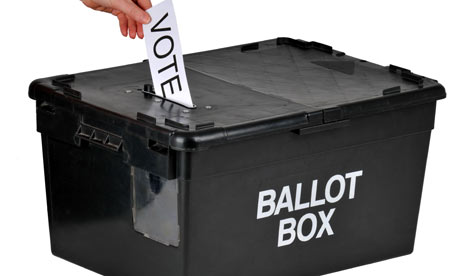
caphttp://static.guim.co.uk/sys-images/Guardian/About/General/2010/4/2/1270211485928/A-ballot-box-001.jpg

We tend to do stuff (in life generally) if the expected benefits outweigh the expected costs. But the expected benefits of voting are basically zero, and the costs aren’t negligible. Your benefit from voting depends on whether your vote influences the outcome of the election. We can crudely estimate your benefit from voting by multiplying the probability that your vote will change the election outcome by the benefit you would gain from your preferred candidate winning. But the probability of you being the decisive voter is TINY (even in marginal constituencies). Thus the benefit from voting is negligible.

Given that there will be a cost to you of voting (taking time to think about policies and go to the polling station etc) we can rightly pose the question: why do we, rational, intelligent human beings, bother voting?

“The rationality of voting is the Achilles’ heel of rational choice theory” (Aldrich, 1997)

Many have attempted to answer that question by adding another ingredient into the mix: the direct benefit to you from voting, irrespective of who wins. This solves the puzzle. Or does it? Without adequately explaining exactly what this direct benefit is and what causes it, all we have is a typical economics fudge.

Some have suggested that the direct benefit is the knowledge that we are fulfilling our civic duty, or that we value being able to voice our opinions, even if it won’t change the election outcome.

One economist, Patricia Funk (2010), thought that the social pressure to vote might have an impact. She analysed the effect of introducing postal voting in Switzerland. Postal voting reduces the social pressure to vote (as you do not have to be seen down the polling station by your community). If this hypothesis is correct then we would expect to see the absence of postal voting lowering turnout in small communities more than in large ones (as everybody knows everybody in a small village etc). This is what she observed. However, there has to be more to puzzle than social pressure, as most people still voted using postal votes.

I will be voting later this evening, and I encourage all you (who can) to do so too. Personally, I think the civic duty suggestion is most accurate but I would be interested to hear your thoughts.

So, why did you/will you vote today?

Social pressure, civic duty or something else? 

Please leave a comment...


Recommended listening:
Sunny Afternoon by The Kinks